The Concept of Power
The Concept of Power is a sophisticated exploration that delves into the intricacies of power dynamics. The first section meticulously focuses on the characteristics commonly found among powerful individuals, offering a nuanced analysis of what enables one to become powerful. The latter half of the book provides examples of individuals manifesting these characteristics. This book refrains from moral judgment on the ethical application of power, instead focusing on the examination of traits that catalyze an individual’s ascent to power. The diverse array of powerful people, through various professions and influences, serves as a study of how power has been wielded for good and bad throughout time.
The design relies on bold typographic hierarchy, controlled color use, and strong compositional contrast to visually communicate themes of visibility, dominance, and public presence. By focusing on power as a performative and perceptual system rather than a moral framework, the publication investigates how influence is visually and culturally constructed.
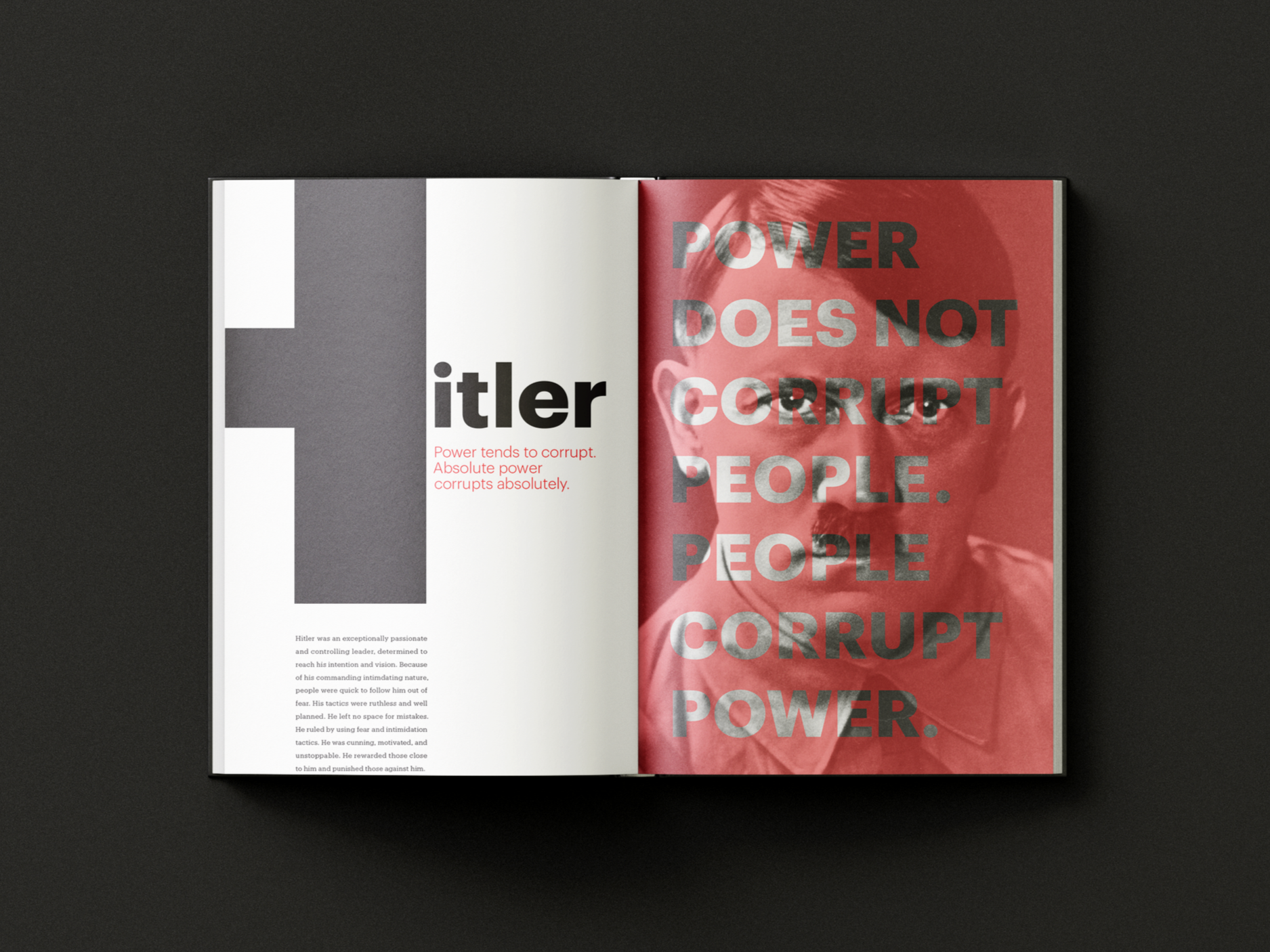
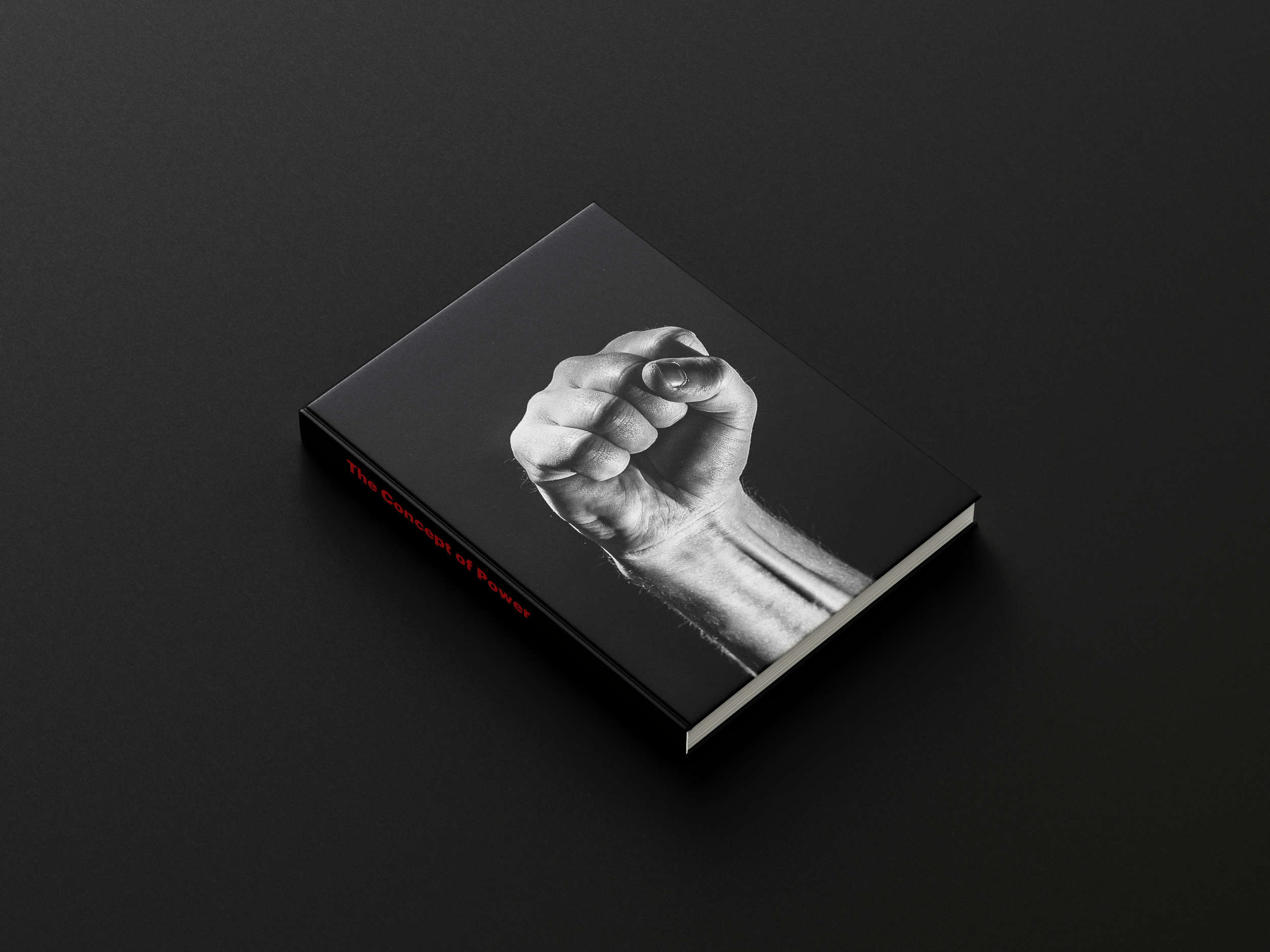
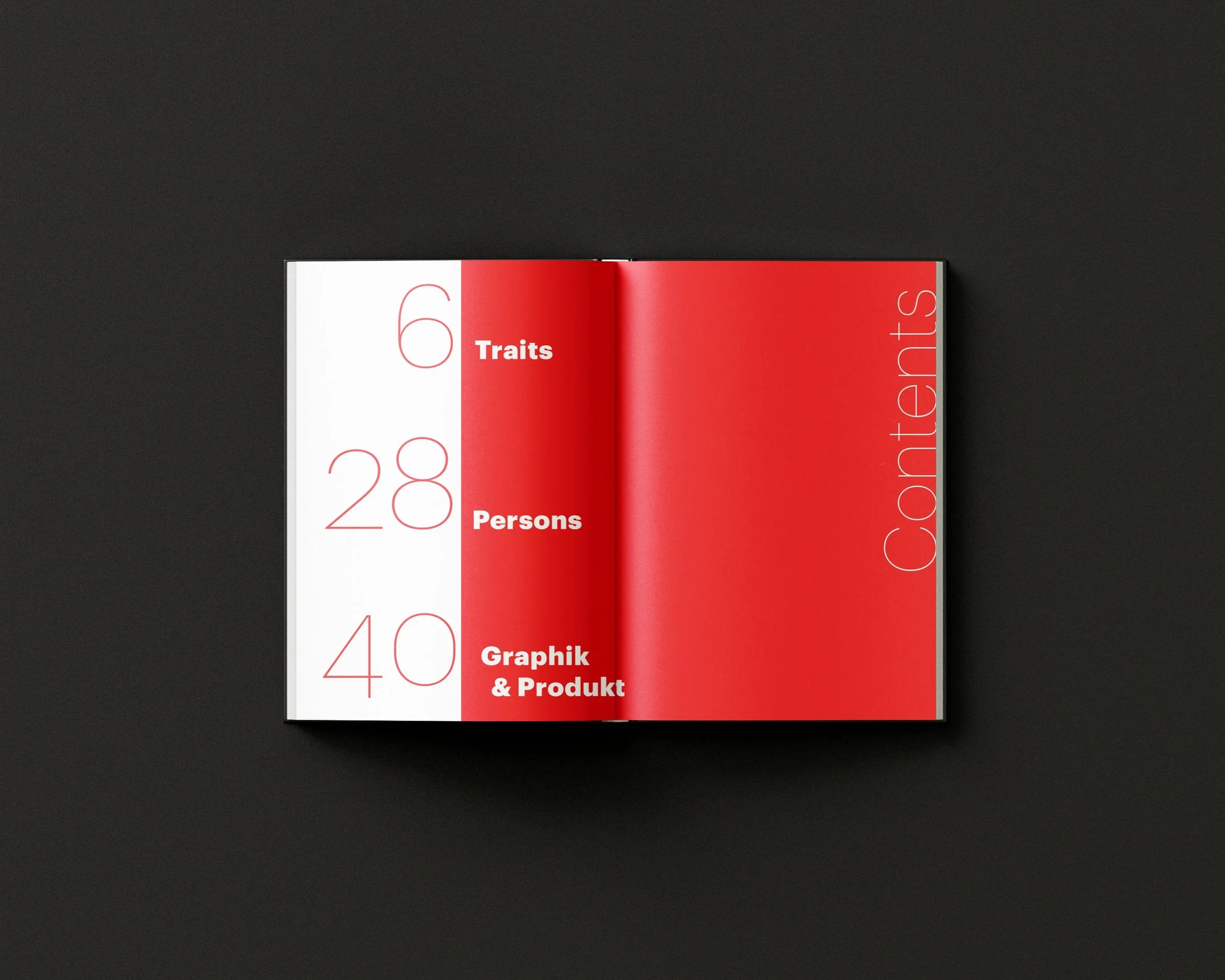

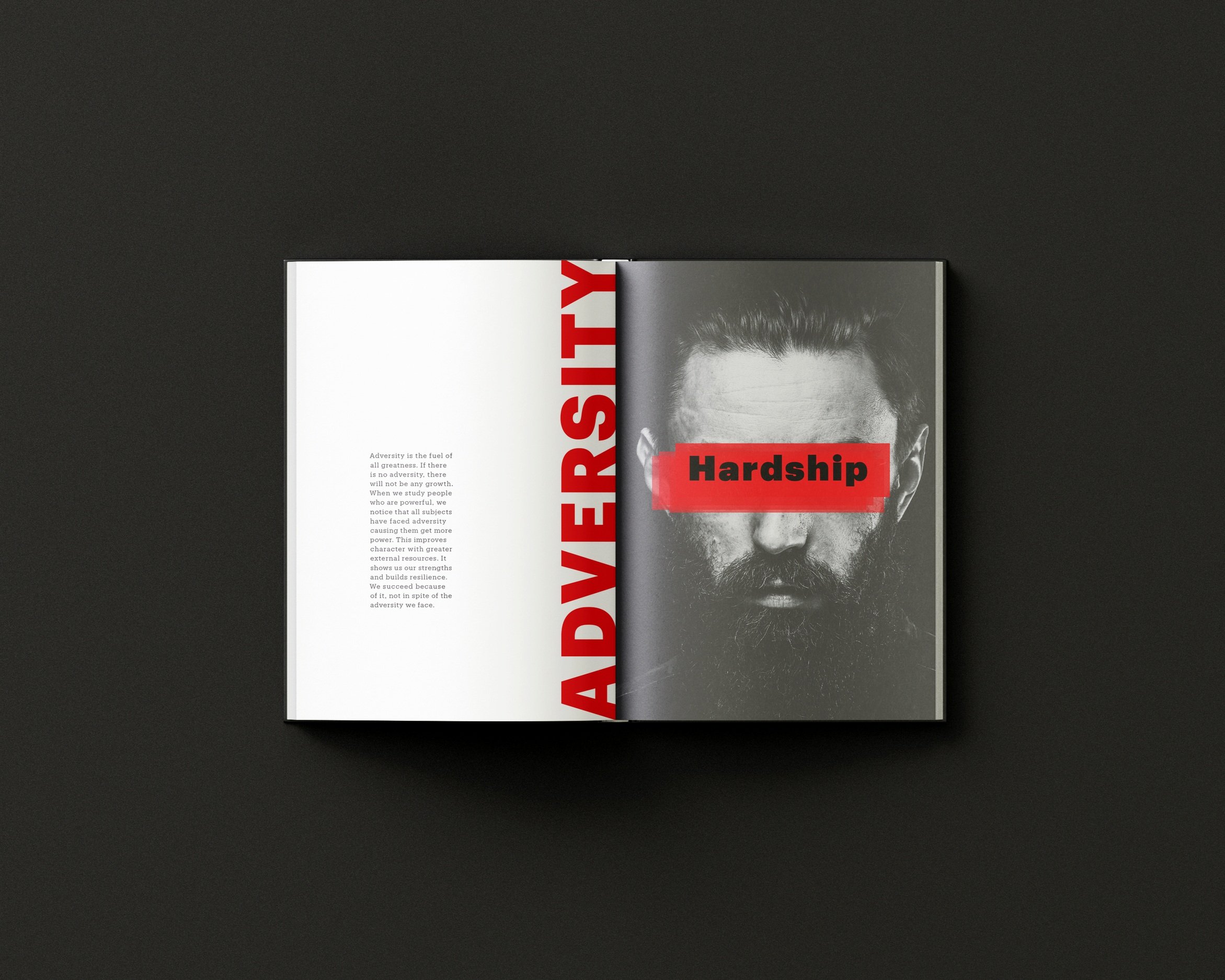
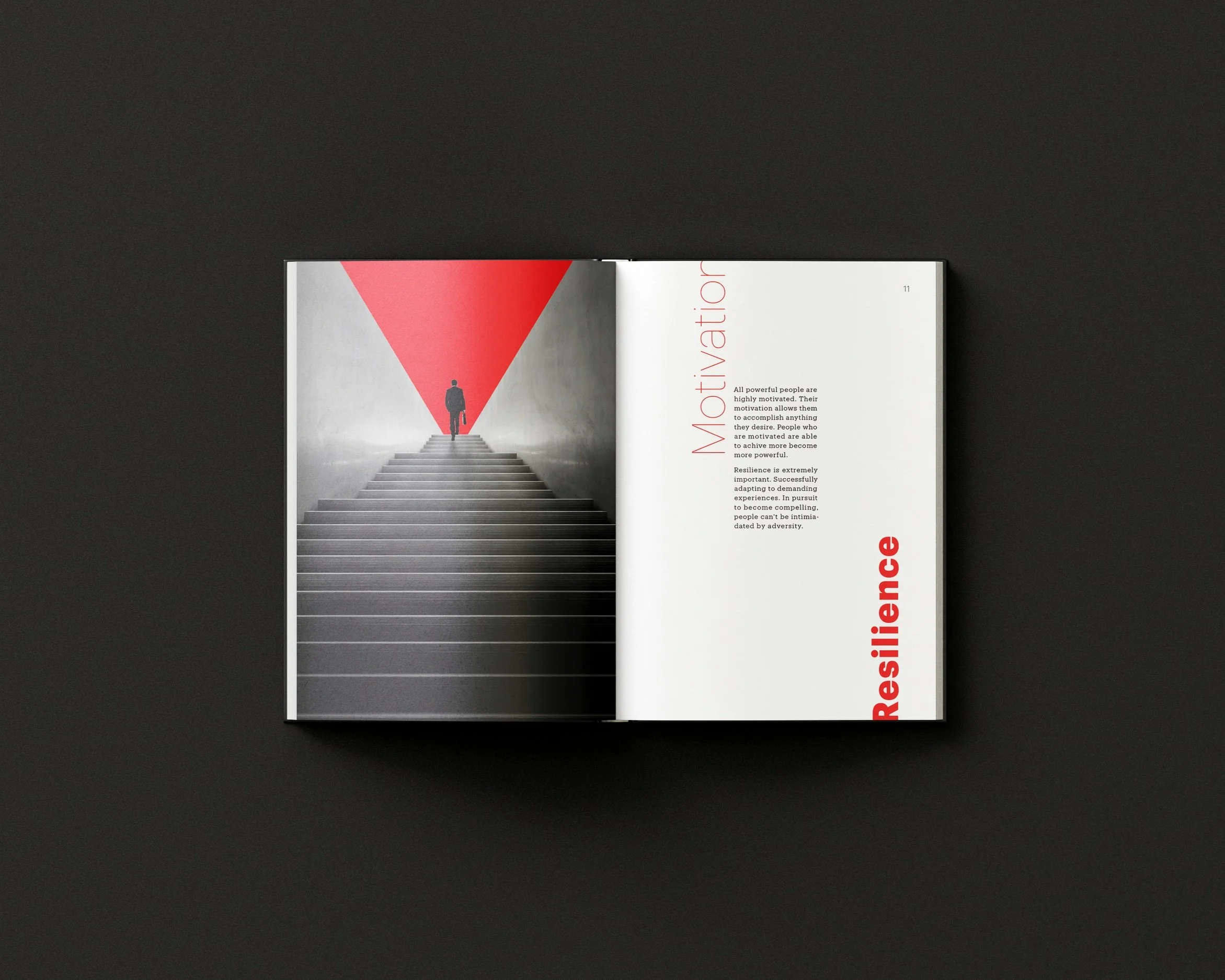
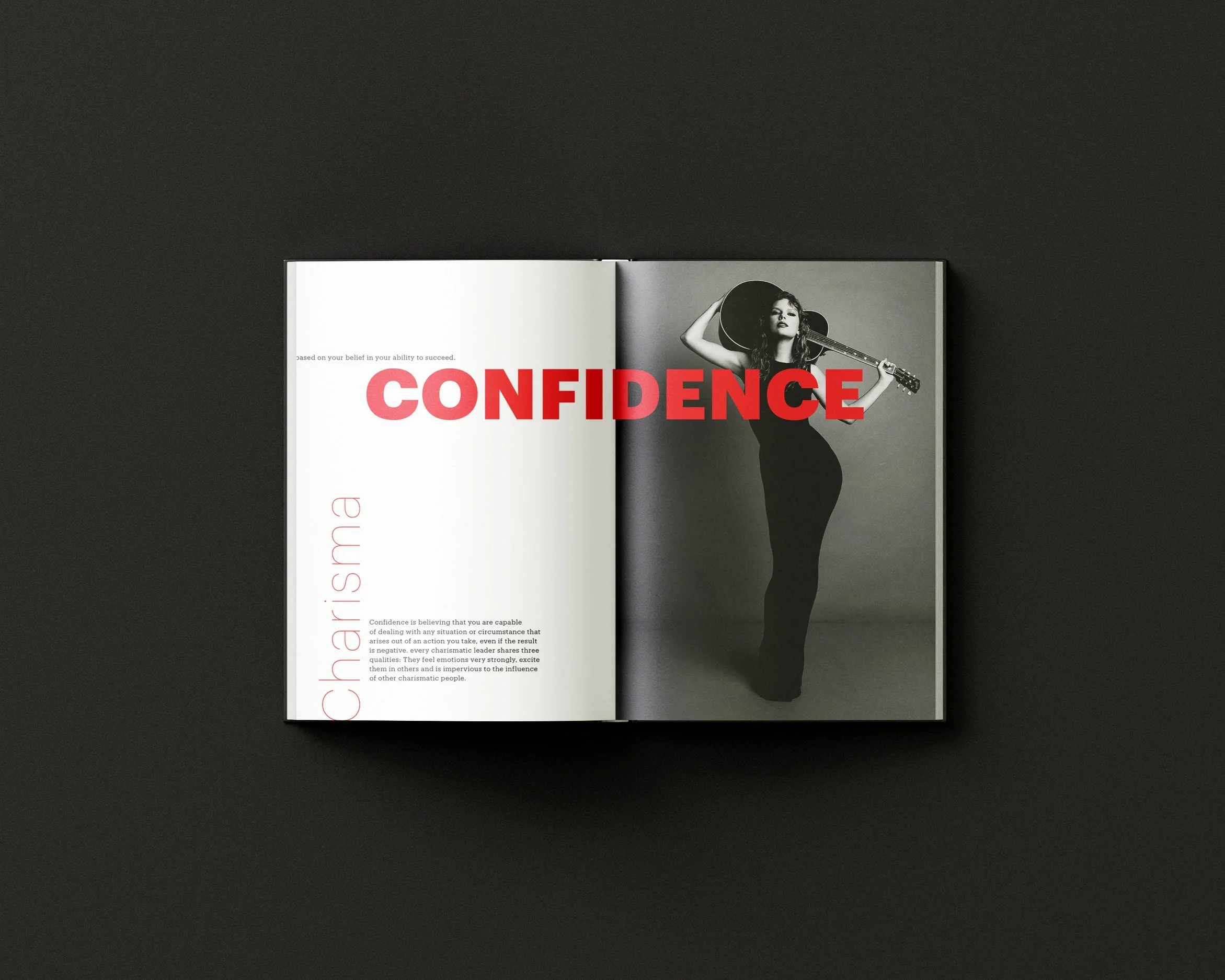
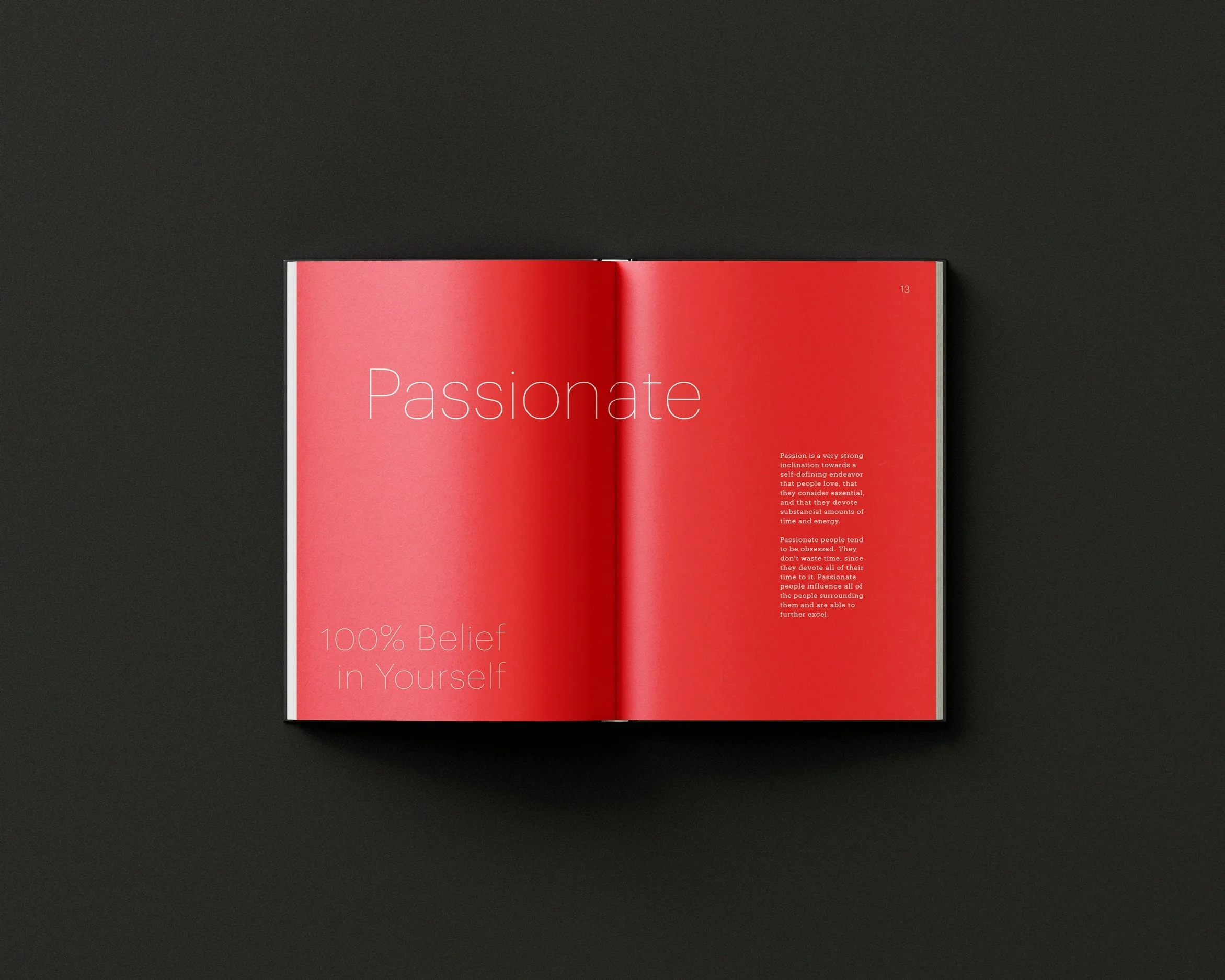
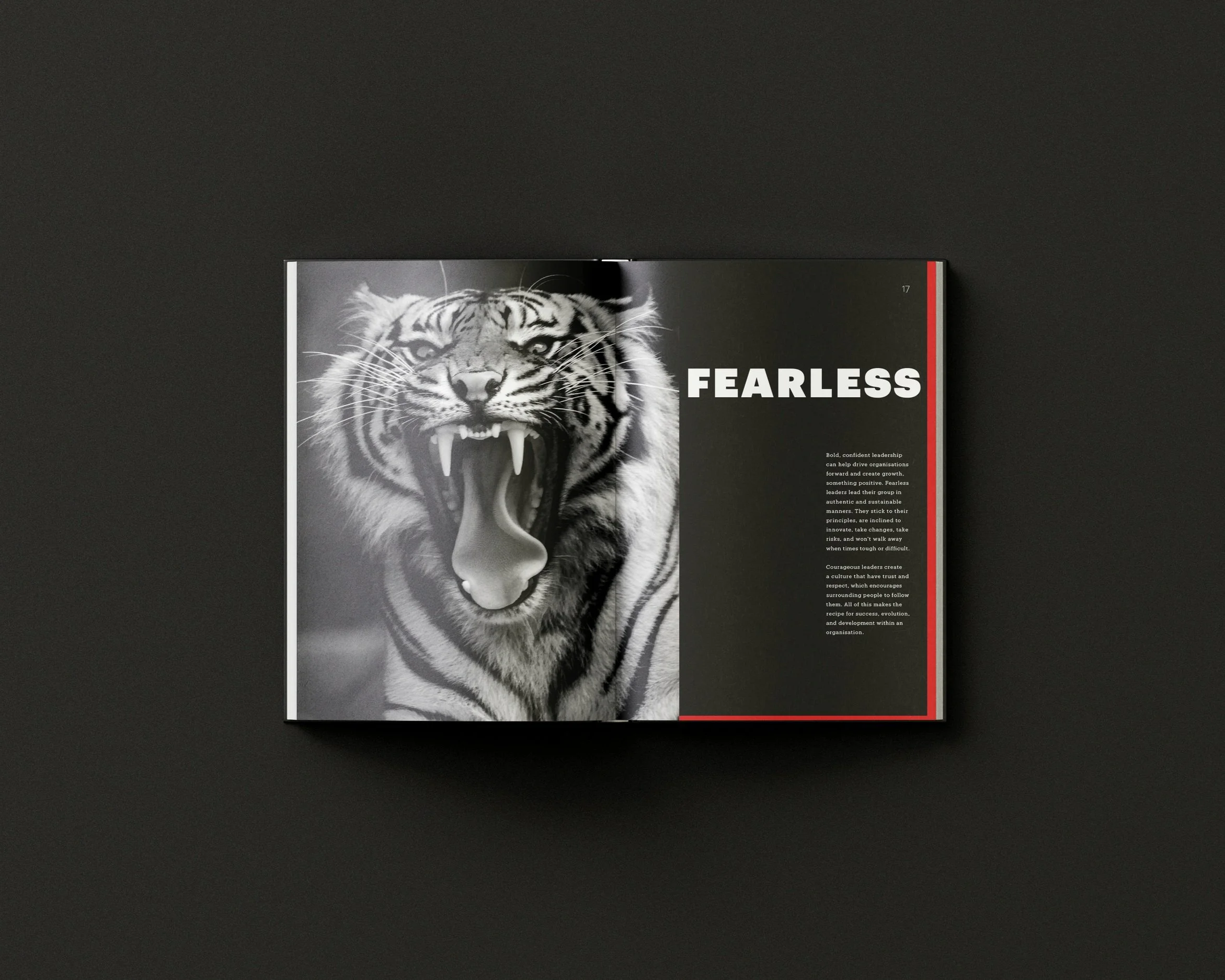
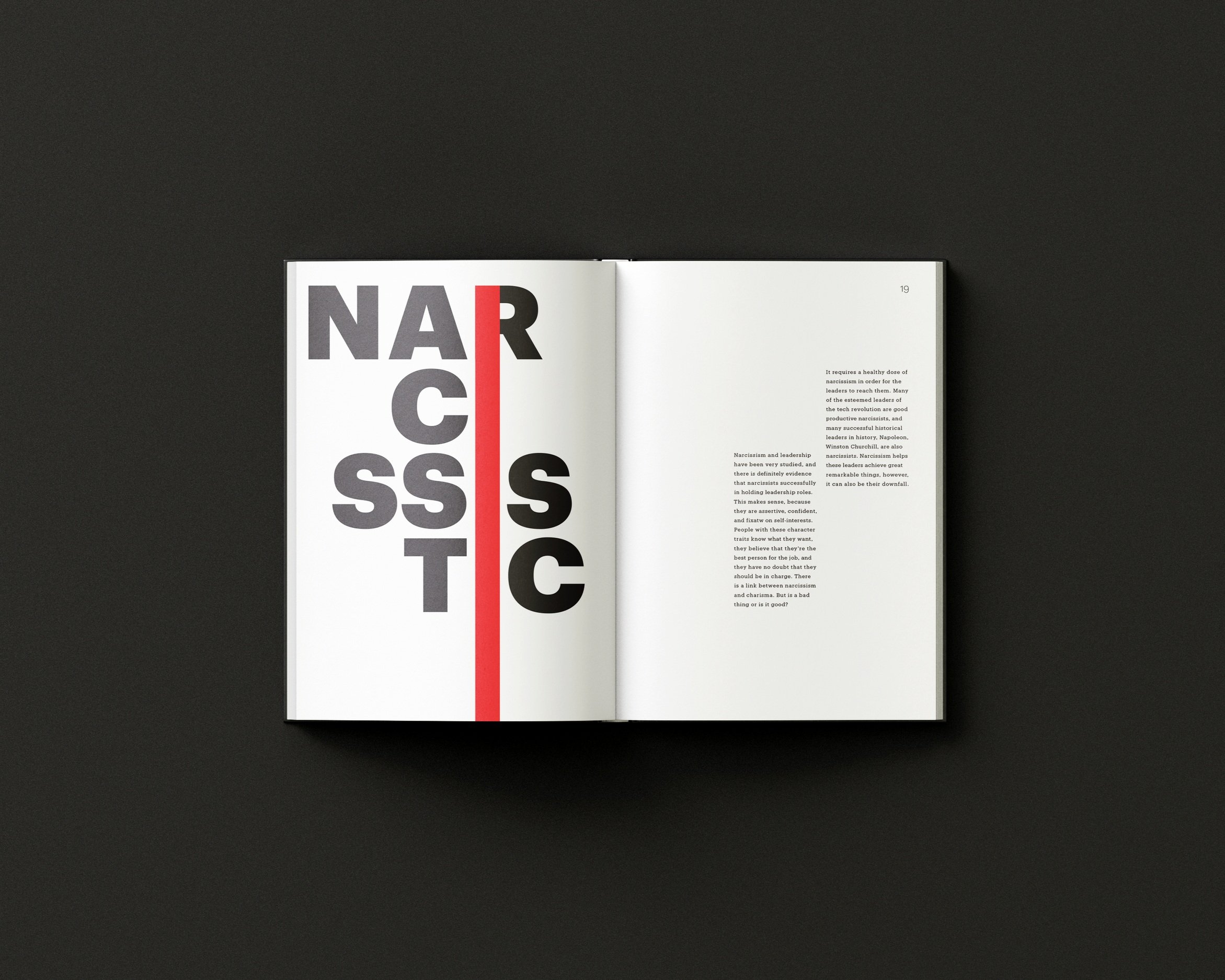
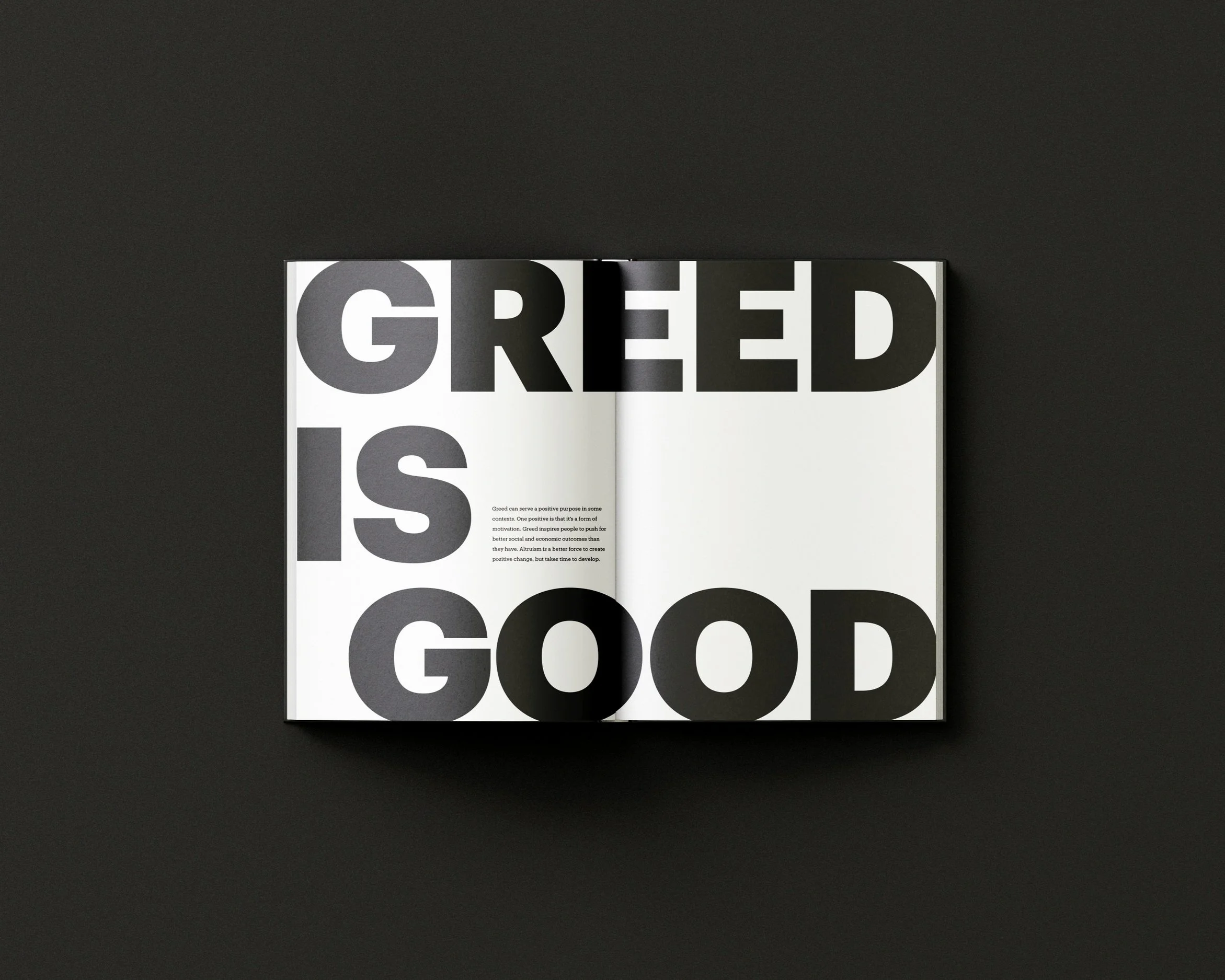
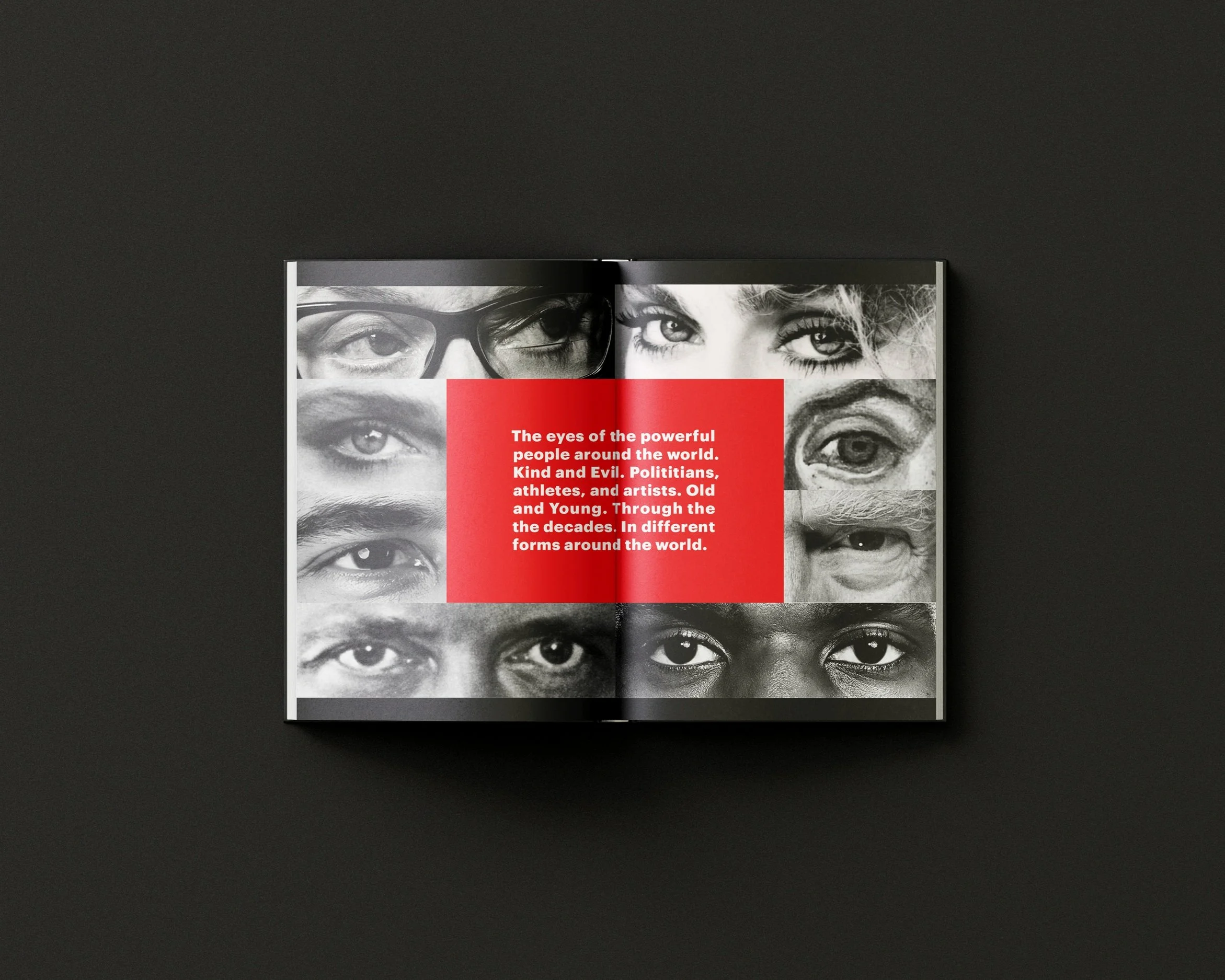
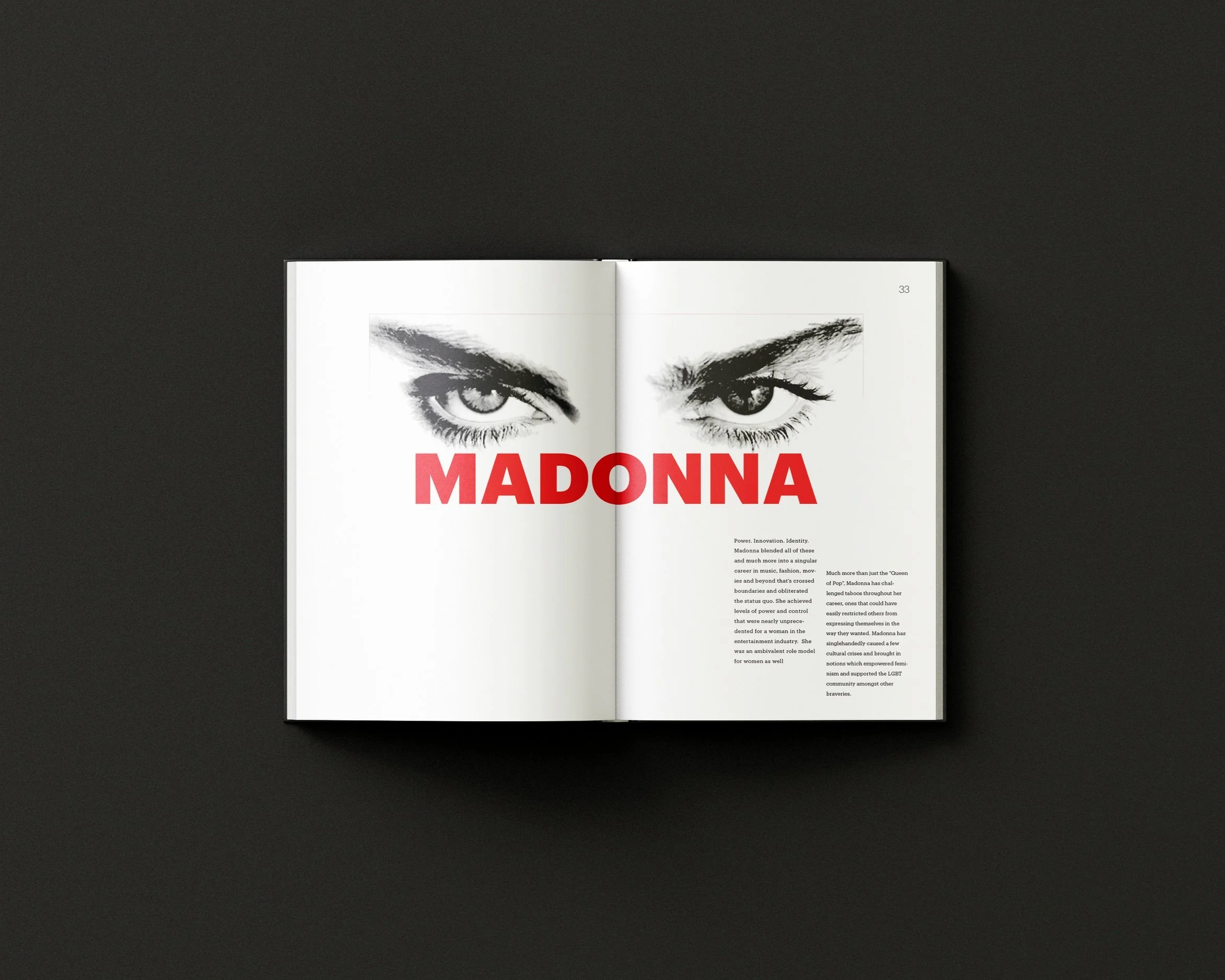
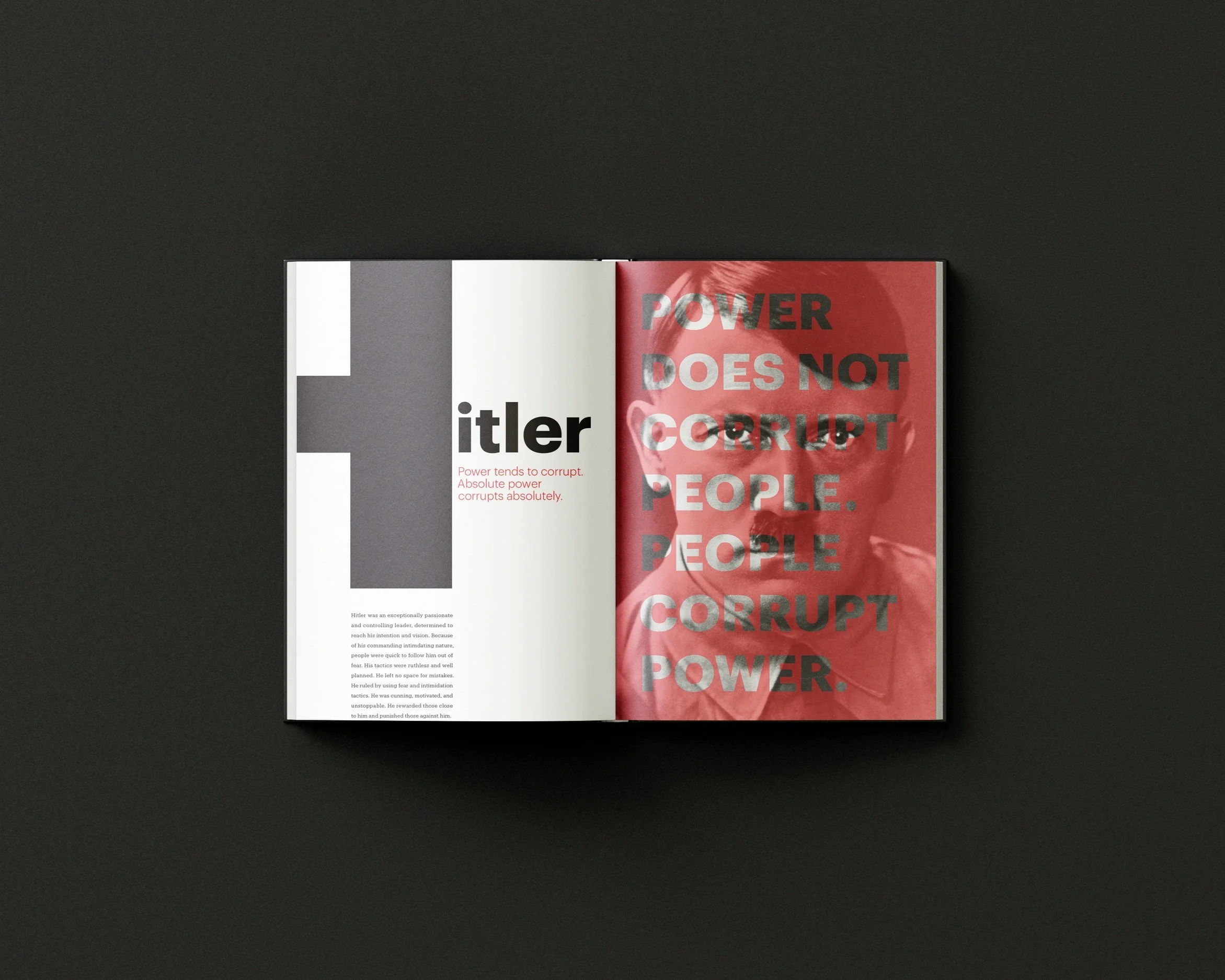
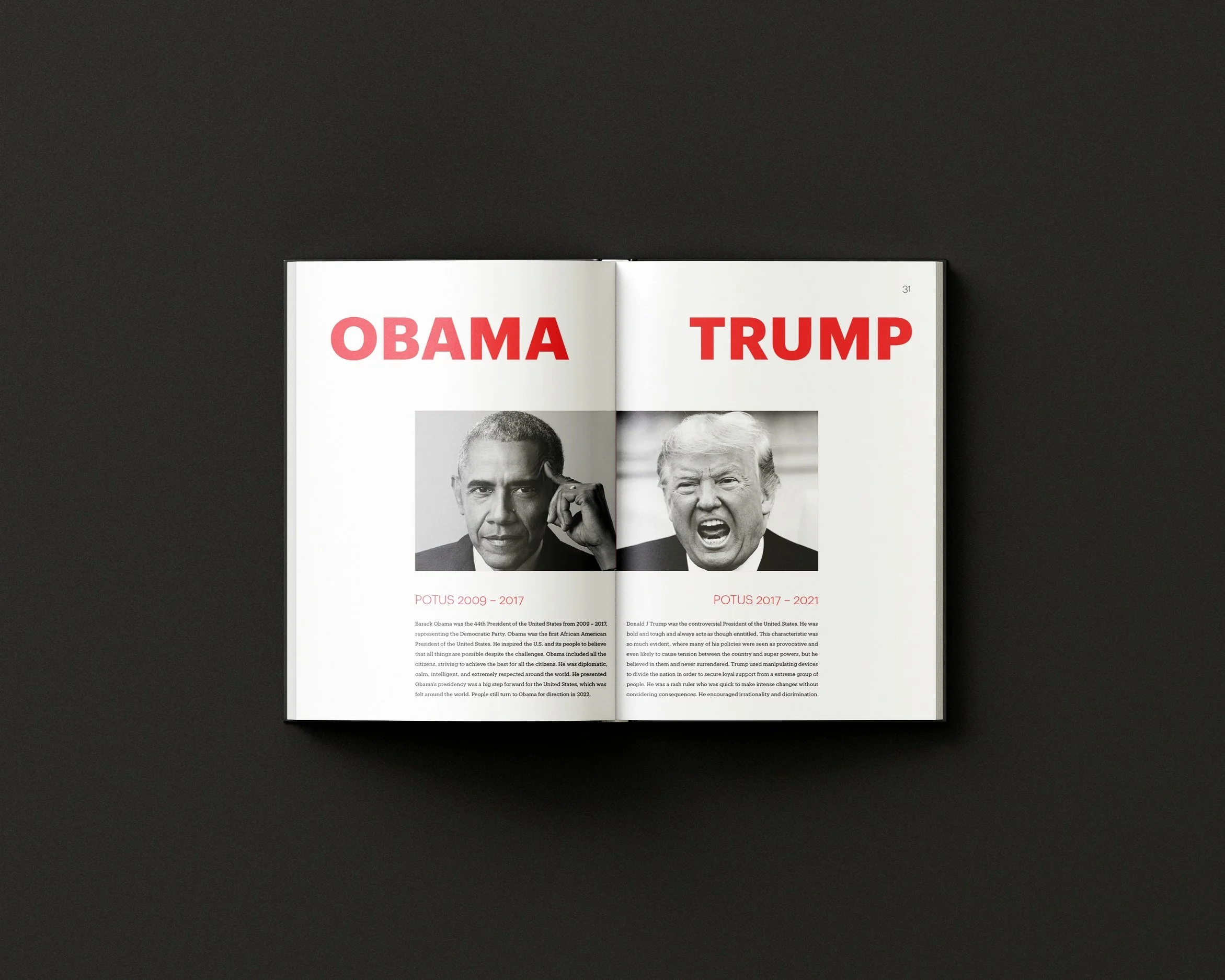
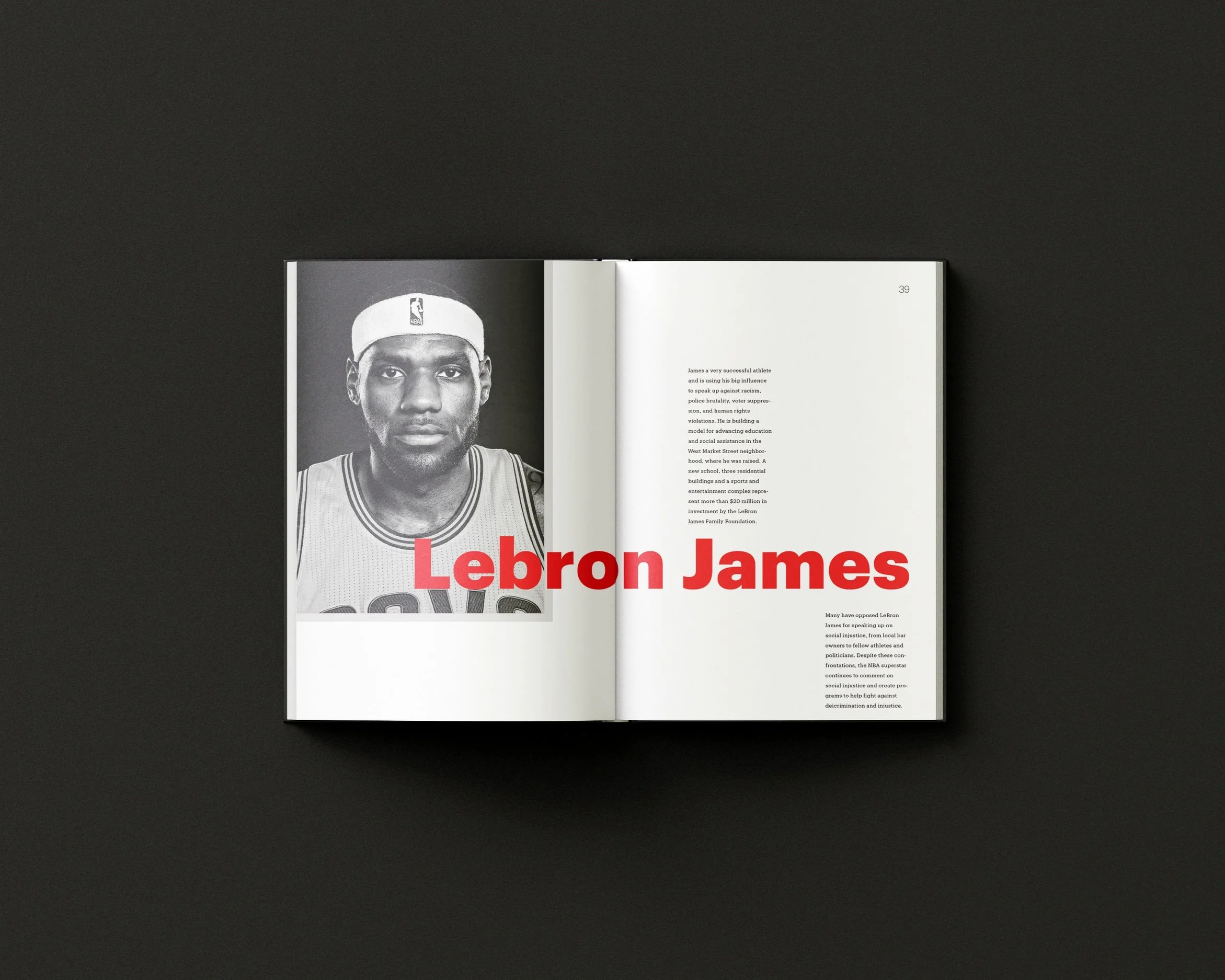
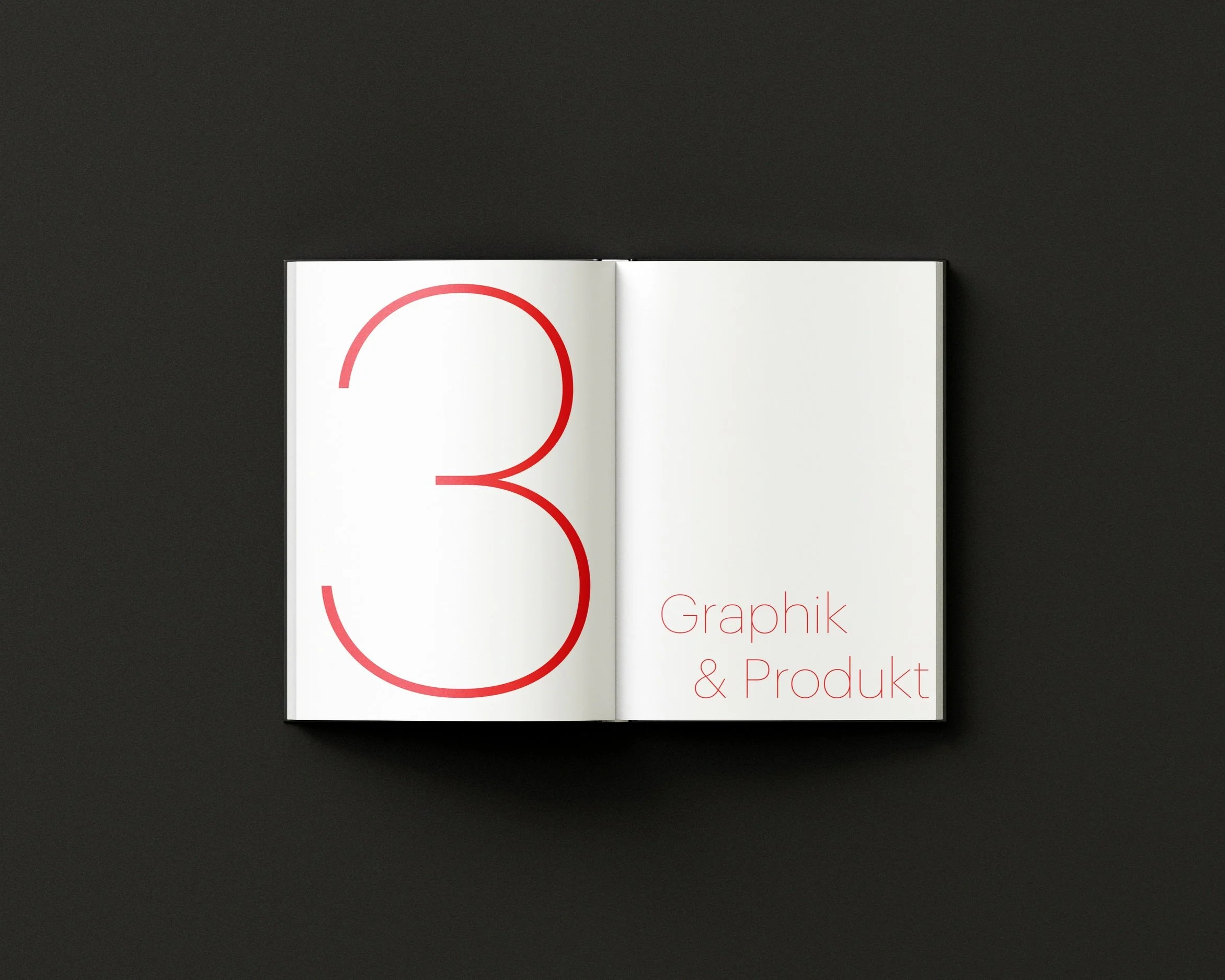
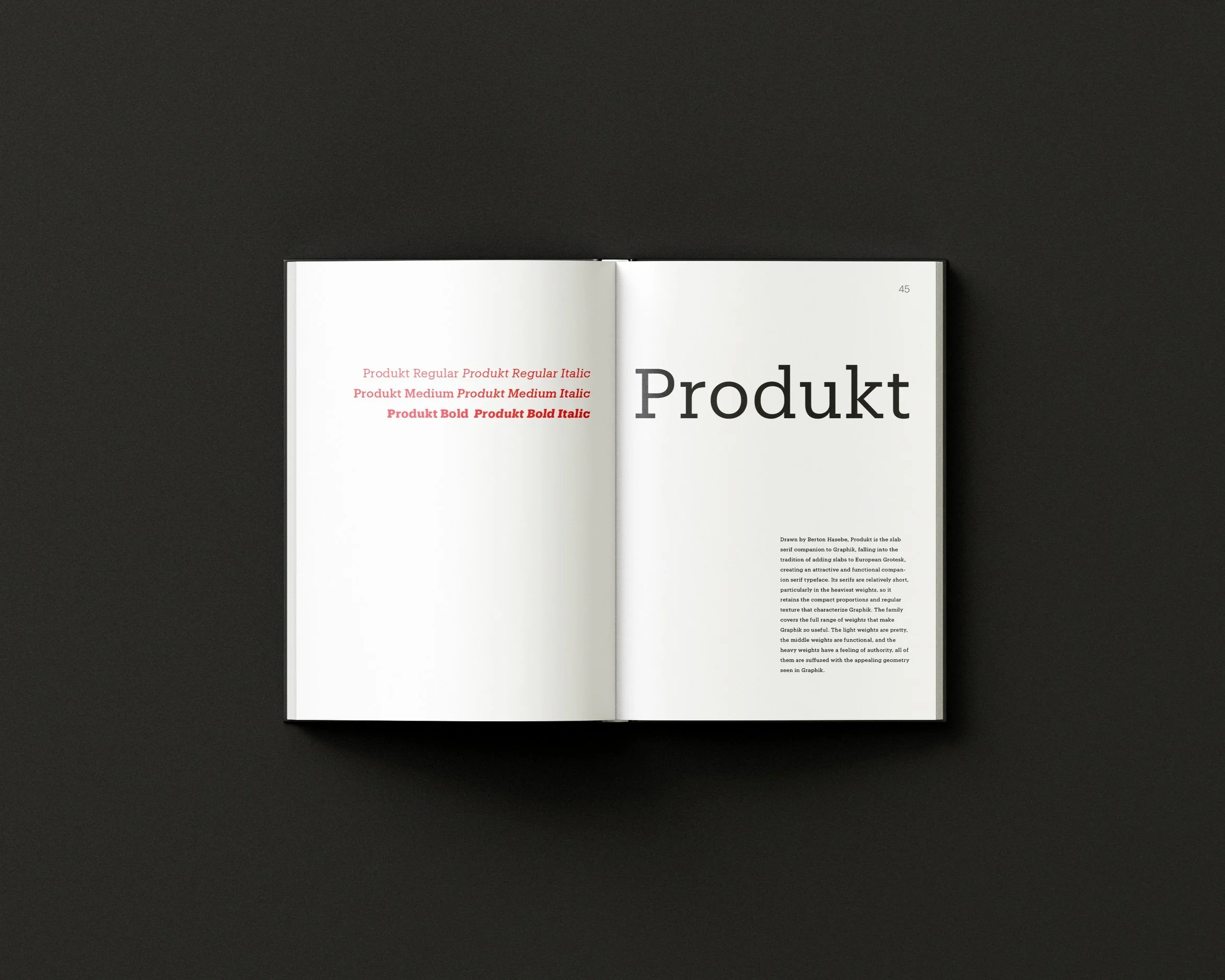
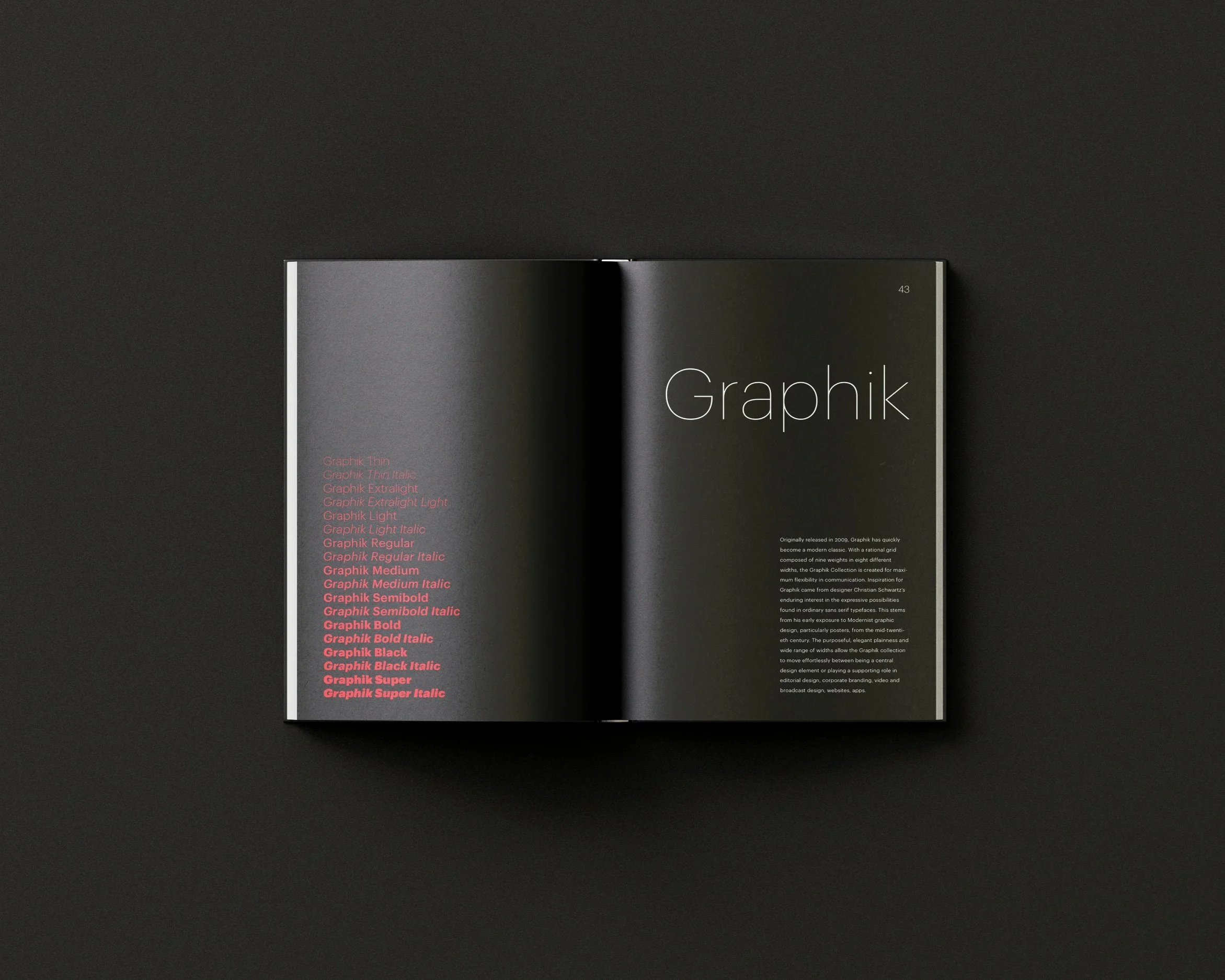
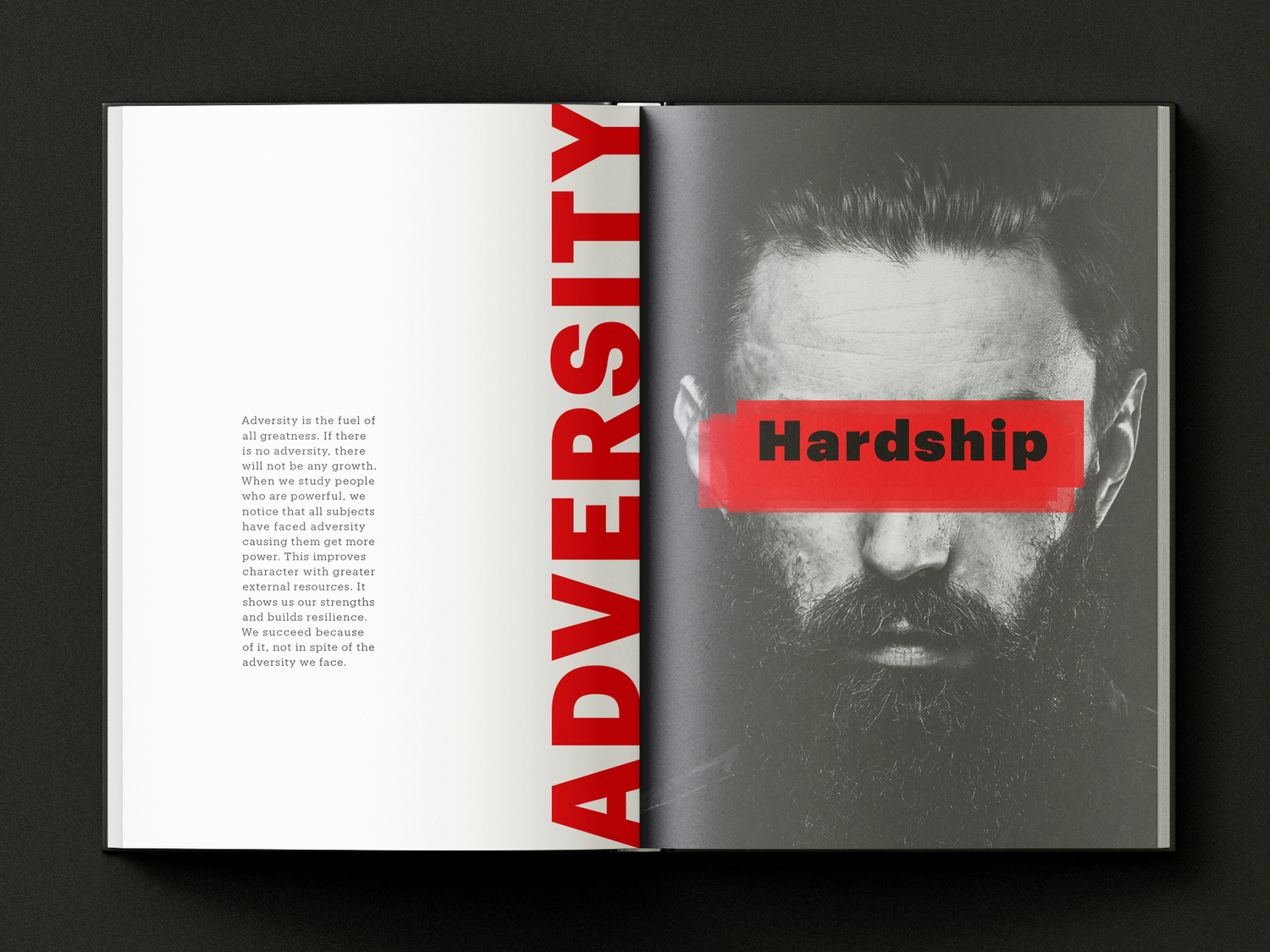
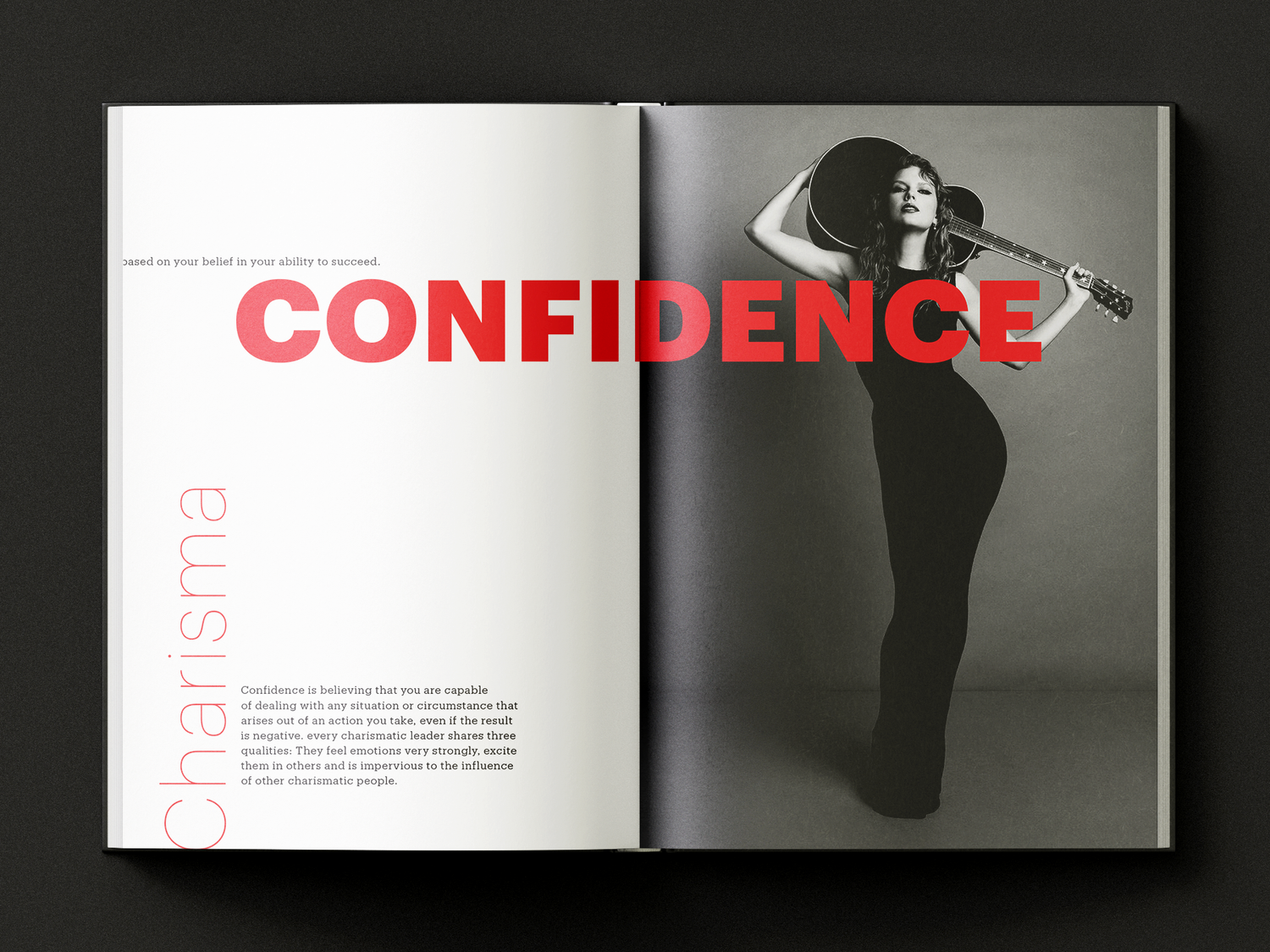
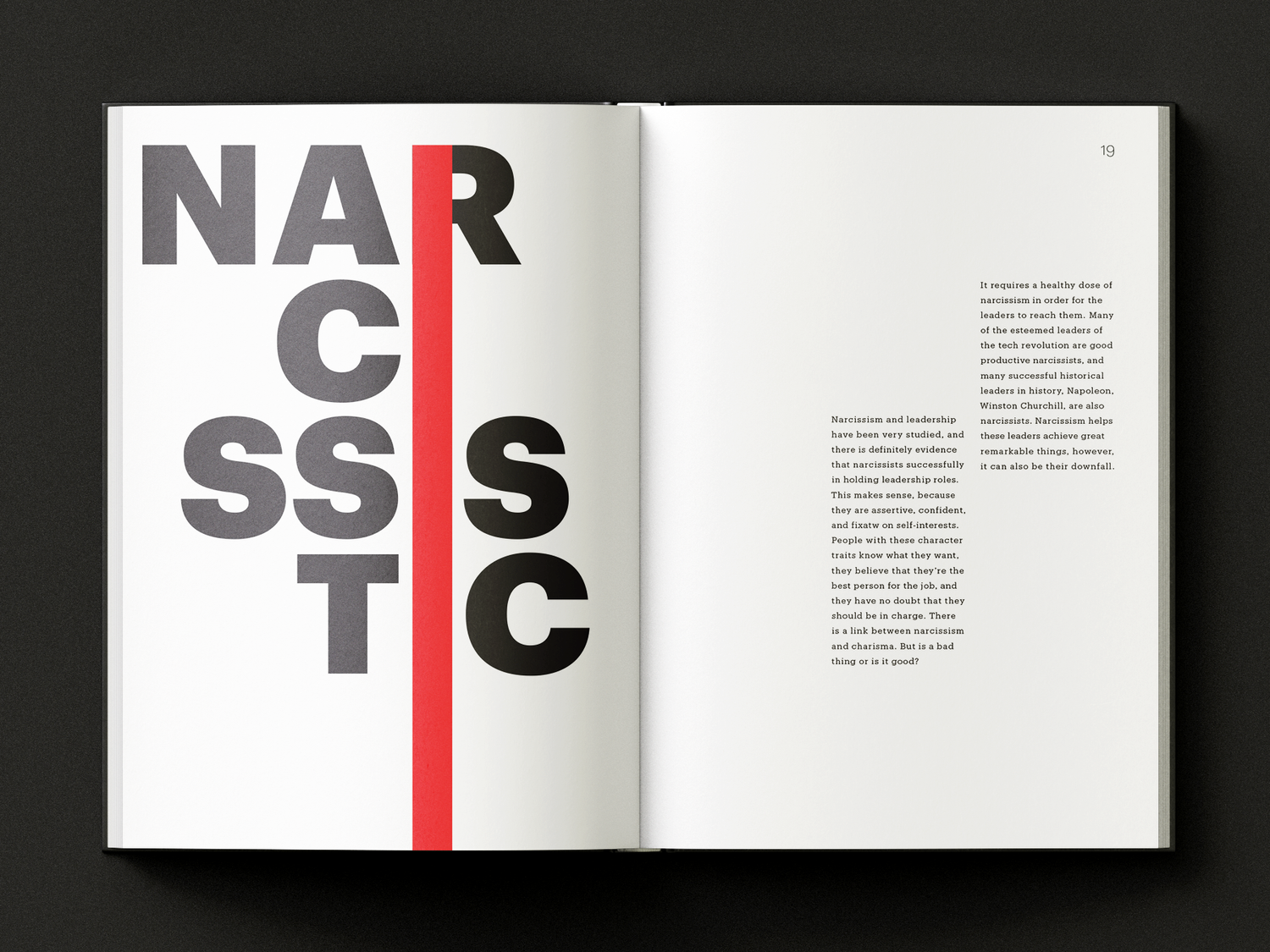
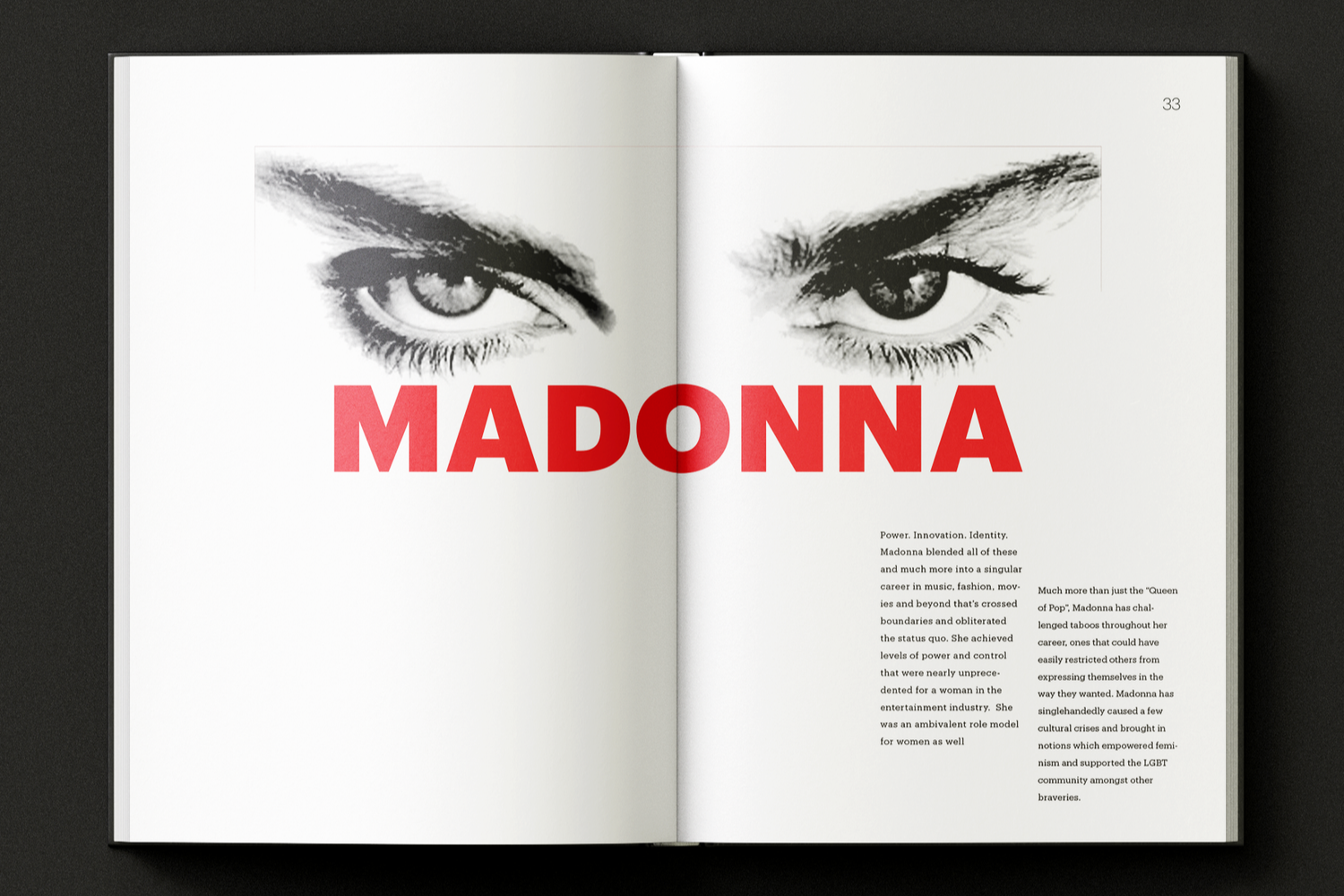
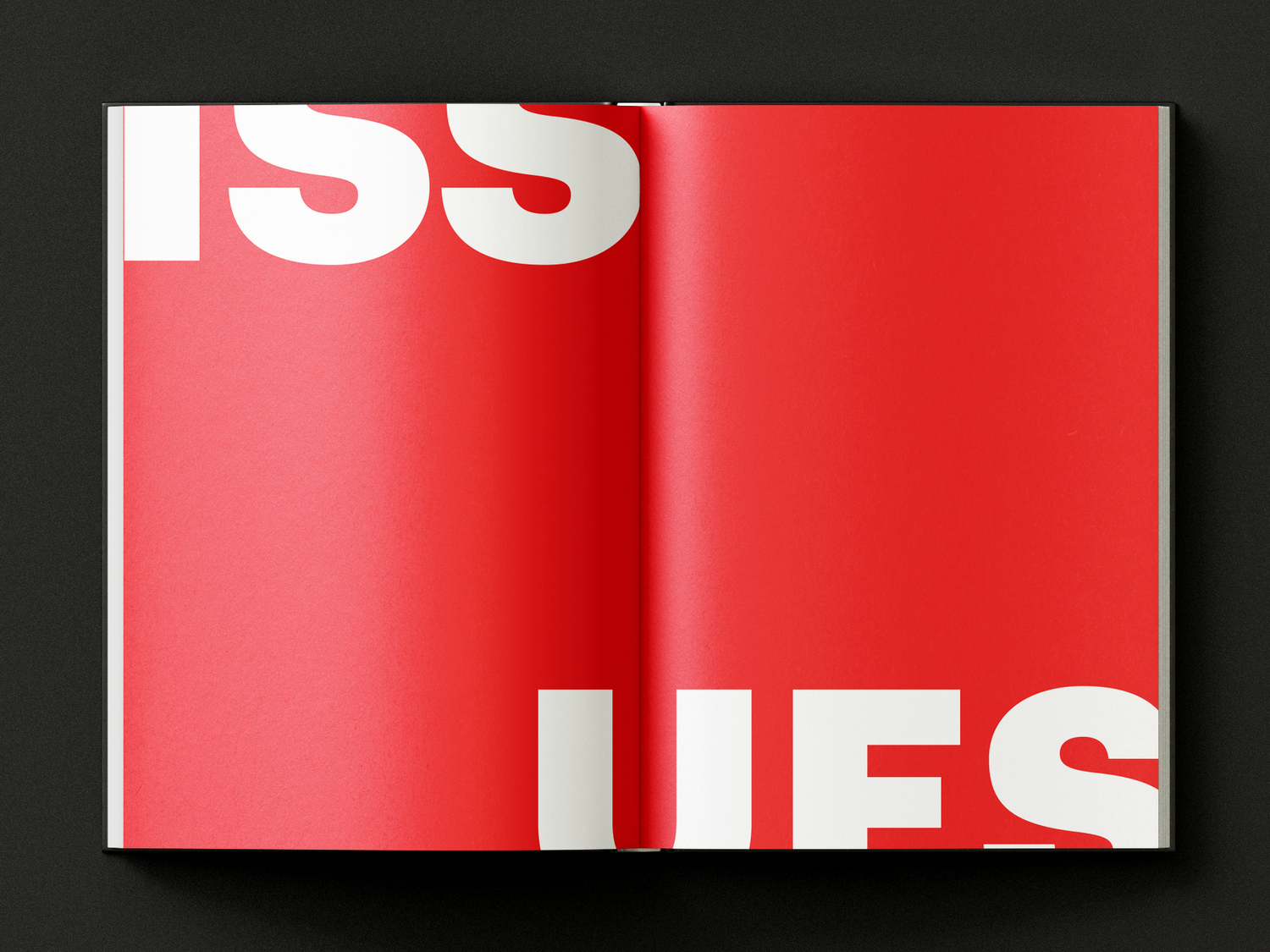
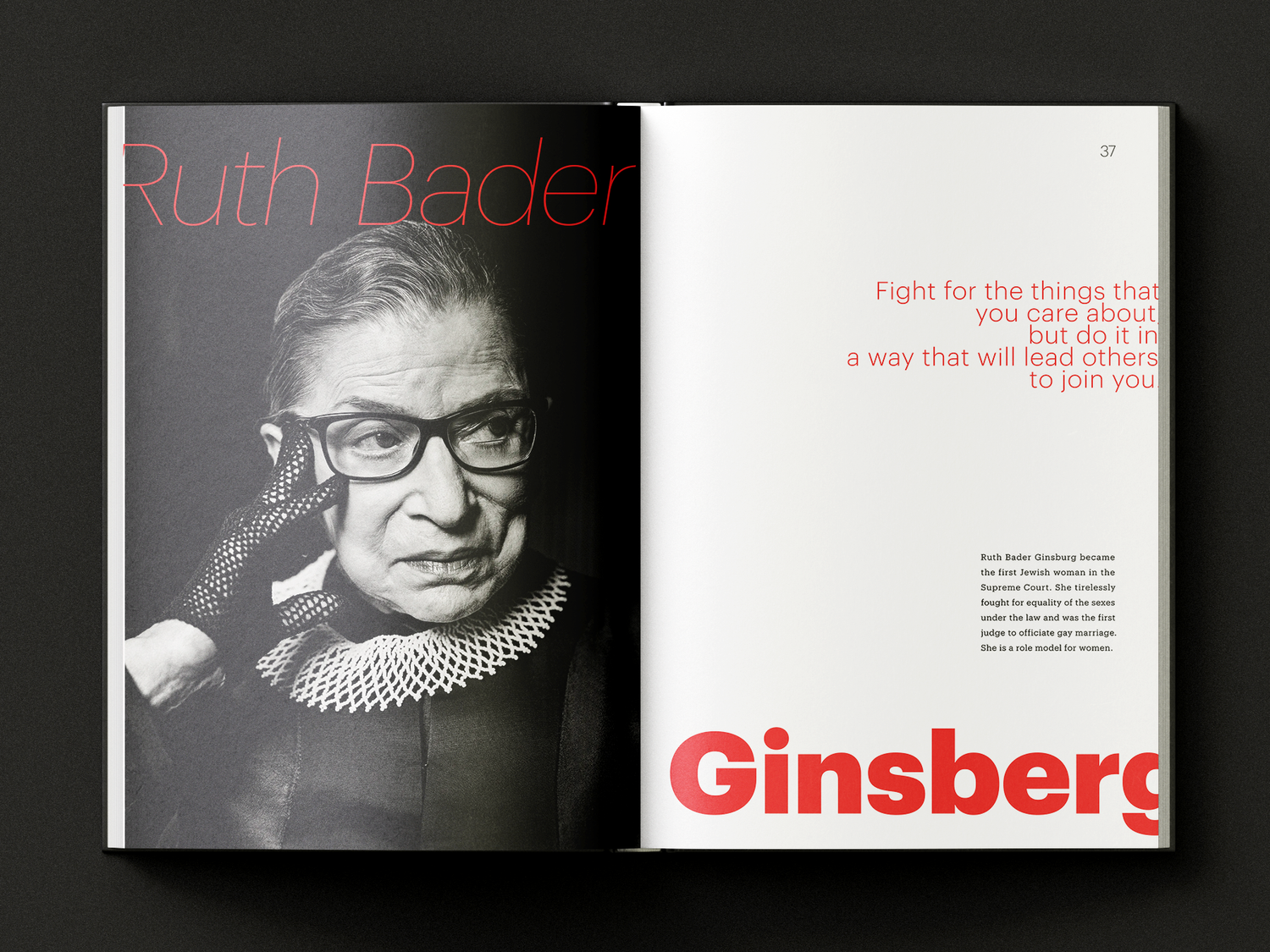
The design uses typography as the primary vehicle for communicating power. Large-scale type, directional composition, and deliberate spatial tension create visual hierarchy that mirrors the commanding presence associated with influential figures. Color is used selectively as an accent to signal emphasis, disruption, and psychological intensity.
Layouts balance structured editorial grids with assertive typographic interventions. This tension between order and dominance reflects the dual nature of power as both system-driven and personality-driven. Image placement and cropping reinforce themes of control, visibility, and persona construction.